A practical guide to product knowledge and selection
Estimated reading time: 5 minutes
Red and white hibiscus may come from the same species, Hibiscus sabdariffa, but they are not interchangeable ingredients.
For a botanical buyer, the difference is not only visual. Calyx colour can influence infusion appearance, formulation suitability, pigment content, and how the ingredient performs in a finished product.
There is also considerable confusion in the market. Terms such as “hibiscus flower,” “petals,” “red hibiscus,” and “white hibiscus” are often used loosely.
The dried material commonly used in herbal teas, beverages, syrups, and food products is usually the calyx: the fleshy structure surrounding the seed capsule. It is not technically the flower petal.
Understanding that distinction is the first step towards selecting the right product.
What do “red” and “white” hibiscus mean?
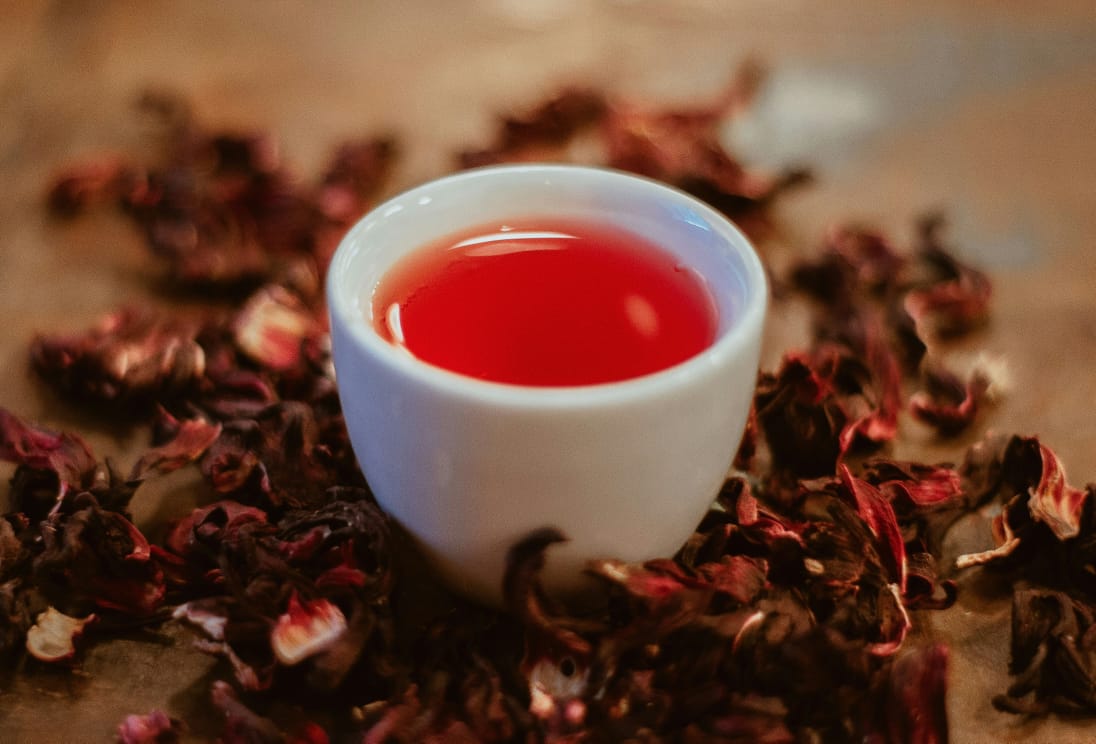
Red hibiscus is the familiar commercial form of Hibiscus sabdariffa. Its dried calyces usually range from bright red to dark burgundy and produce the strong red infusion associated with zobo, bissap, karkade, and sorrel drinks.
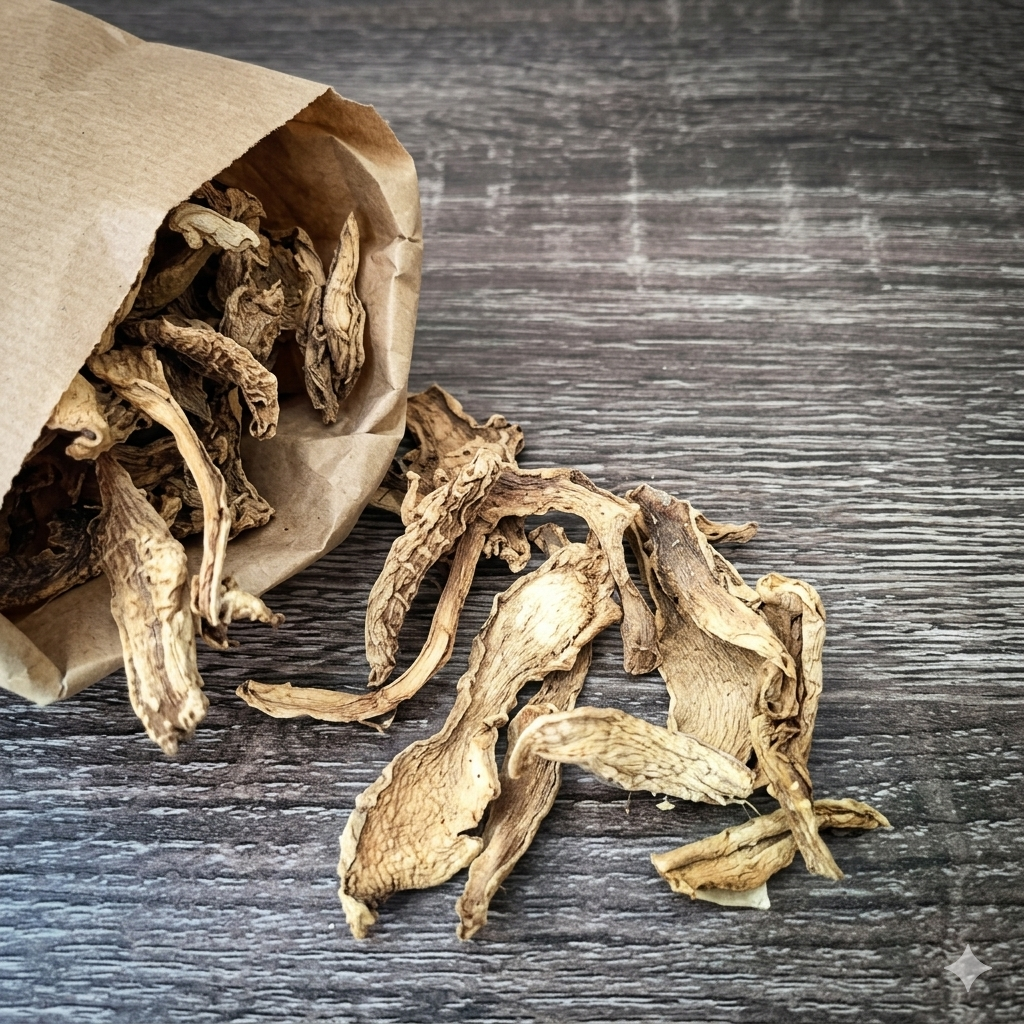
White hibiscus is a naturally pale, non-pigmented form of roselle. Despite the name, its dried calyces may appear light green, cream, yellowish, or beige rather than pure white. In some West African markets, it may be called white bissap or white sorrel.
White hibiscus should not be confused with:
- Red hibiscus that has faded during poor storage
- Chemically bleached material
- Ornamental white-flowering hibiscus species
- Red hibiscus containing an unusually high proportion of pale pieces
This distinction matters because a naturally white variety and a degraded red batch are fundamentally different products.
The main difference: pigmentation
The most visible difference is the presence of anthocyanins.
Anthocyanins are water-soluble plant pigments that give red hibiscus its characteristic ruby or burgundy colour. Two important anthocyanins identified in red roselle are delphinidin-3-sambubioside and cyanidin-3-sambubioside.
White or pale-green calyx varieties contain little or no detectable anthocyanin pigmentation. However, that does not mean the white variety contains no useful plant compounds. Research has identified other phenolic compounds and organic acids in both red and white roselle.
The practical implication is straightforward:
Red hibiscus is usually the better choice when strong natural colour is central to the finished product. White hibiscus may be more suitable when that red colour is unnecessary or undesirable.
Are they different in flavour?
Both varieties can produce a tart infusion because roselle naturally contains organic acids. However, flavour cannot be predicted reliably from colour alone.
Variety, origin, harvest maturity, drying method, storage conditions, and crop season can all influence acidity, aroma, and overall sensory character.
A pale calyx is therefore not automatically milder, and a dark red calyx is not automatically more acidic or better tasting.
For commercial product development, buyers should request representative samples and test them in the intended application.
Useful sensory checks may include:
- Tartness and acidity
- Aroma
- Astringency
- Aftertaste
- Colour intensity
- Compatibility with other ingredients
- Required inclusion rate
A laboratory specification is important, but it cannot fully replace a formulation or infusion trial.
When is red hibiscus the better choice?
Red hibiscus is generally the more familiar option in international food and beverage markets.
It is commonly used for:
- Herbal teas and fruit infusions
- Zobo, bissap, karkade, and sorrel-style beverages
- Beverage concentrates
- Syrups and cordials
- Jams and jellies
- Products requiring a visible red or purple infusion
- Natural-colour applications, subject to formulation and regulatory assessment
For a tea or beverage buyer, colour strength can have a direct commercial effect. A weakly pigmented batch may require a higher inclusion rate to achieve the desired appearance, potentially changing cost, flavour, and acidity.
However, darker is not automatically better. A very dark dried sample may reflect the natural variety, but colour can also be influenced by age, oxidation, drying temperature, moisture exposure, and storage conditions.
The dried appearance should therefore be assessed together with infusion performance and the agreed quality specification.
When might white hibiscus be preferable?
White hibiscus is less common in many export markets, but it may be useful when a formulator wants roselle’s tart character without a dominant red colour.
Potential applications include:
- Pale herbal infusions
- Light-coloured beverage blends
- Sauces or culinary products where red staining is undesirable
- Products in which another ingredient should determine the final colour
- Traditional regional products made with white bissap or white sorrel
- New product development requiring a less familiar botanical ingredient
White hibiscus should not be treated simply as an inferior form of red hibiscus. It is better understood as a different raw material with a different formulation role.
At the same time, buyers should not assume that the white variety will behave identically apart from colour. Its acidity, extractability, aroma, and sensory profile should be assessed in the intended product.
A useful case study from Senegal
A Senegal-based hibiscus quality-improvement study examined several calyx types, including dark red, medium red, pink, and non-pigmented green calyces known locally as white bissap.
The study highlighted an important lesson for botanical procurement:
Variety matters, but post-harvest control matters too.
After producer training and quality-control improvements were introduced, later-season red hibiscus showed better consistency in areas such as colour uniformity, cleanliness, foreign-matter control, and anthocyanin content.
This means a buyer should not select hibiscus by colour category alone.
Two red batches can differ significantly. The same is true of two white batches. Supply-chain practices remain a major part of product quality.
What buyers may need to specify
Ordering only “red hibiscus” or “white hibiscus” may not provide enough information for a reliable commercial purchase.
Depending on the intended application, buyers may need to agree the following:
Botanical identity
The specification should state Hibiscus sabdariffa and identify the required calyx type or variety where possible.
Product form
Clarify whether the requirement is for whole calyces, broken calyces, tea-bag cut, granules, or powder.
Colour and infusion performance
For red hibiscus, the buyer may need to define the expected dried appearance and infusion colour.
Where colour is commercially important, a measurable colour or anthocyanin parameter may be appropriate.
For white hibiscus, the buyer should define the acceptable natural pale-green, cream, or beige appearance and make clear that faded or bleached red material is not acceptable.
Sensory profile
Expectations may include characteristic aroma, tartness, and freedom from musty, smoky, chemical, or foreign odours.
Cleanliness
The specification may address foreign matter, sand, stems, seed-capsule fragments, insects, visible mould, and other physical contaminants.
Moisture and storage condition
Dried hibiscus can reabsorb moisture. The agreed moisture limit, packaging, and storage conditions should reflect the intended use, customer requirements, and destination market.
Testing and documentation
The appropriate laboratory panel should be risk-based and agreed according to the customer specification, intended use, origin, and applicable regulations.
Depending on the case, this may include microbiology, pesticide residues, contaminants, or other customer-specific parameters.
Traceability
The sample, Certificate of Analysis, and commercial shipment should refer clearly to the same identifiable batch where such documentation is required.
Availability should be confirmed before commitment
Red hibiscus is more widely traded in many export markets than white hibiscus.
White hibiscus may be available only from certain origins, growers, or crop seasons, and commercial quantities may be more limited.
Availability, product form, annual volume, lead time, and supporting documentation can vary according to:
- Origin
- Harvest season
- Supplier capability
- Processing method
- Customer specification
- Required testing
- Minimum order quantity
For this reason, buyers should confirm sourcing feasibility before finalising a formulation or making a commercial commitment.
A product that performs well in a trial is only commercially useful if it can also be sourced consistently in the required quantity and quality.
A practical selection guide
Choose red hibiscus when:
- A red or burgundy infusion is central to the product
- Natural pigmentation is commercially important
- The product is intended for a traditional red hibiscus beverage
- The formulation has been tested for colour and flavour performance
Consider white hibiscus when:
- A pale finished product is required
- Strong red pigmentation would interfere with the formulation
- The buyer wants a differentiated ingredient
- The product has been tested with the white variety
- Commercial availability has been confirmed
In both cases, the supplier should be evaluated on more than colour.
Final takeaway
Red and white hibiscus are not simply two grades of the same ingredient.
Red hibiscus is rich in the pigments responsible for its recognisable colour and is generally the better choice for deeply coloured teas, beverages, and food applications.
White hibiscus is a naturally non-pigmented roselle type that may suit products where a strong red colour is not wanted.
Neither colour guarantees quality.
Quality also depends on botanical identity, variety, cleanliness, maturity, drying, moisture control, storage, sensory performance, testing, traceability, and supplier reliability.
At FairBotanicals, we are developing our product-selection approach around clear customer requirements, realistic sourcing capabilities, and transparent communication about origin, availability, documentation, and intended use.
Where a particular hibiscus type is requested, our aim is to assess its sourcing feasibility and suitability before making a commercial commitment.
The most useful question is therefore not only:
“Is this red or white hibiscus?”
It is:
“Which hibiscus is suitable, available, and reliable for the product we are trying to create?”